Cactus Hugs Font Review
It’s 9 PM on a Tuesday, and I’m finalizing the visuals for a seasonal sale campaign. The client wants something playful, approachable, and memorable. I’ve been bouncing between a few script fonts, but nothing feels quite right. Then I remember Cactus Hugs—its soft curves and friendly vibe might just be the missing piece.
What Is Cactus Hugs?
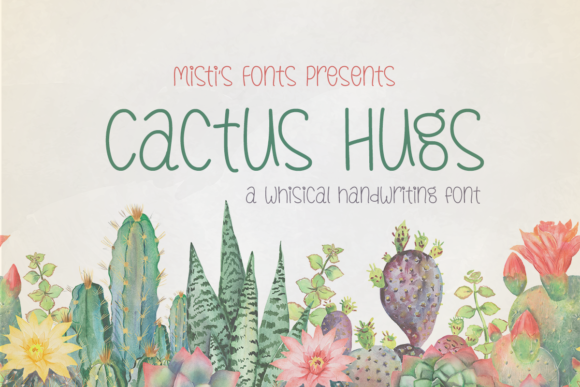
Cactus Hugs is a handwritten typeface with a warm, whimsical personality. Its style leans into casual, personal expression, making it ideal for creative projects that want to feel human and authentic. The font has a slightly uneven baseline, giving it a handcrafted look that stands out in digital spaces. It’s not overly ornate, but it carries enough character to make a statement without overwhelming the design.
For a brand aiming to feel more accessible or fun, Cactus Hugs can help establish that tone quickly. It’s especially effective when used in small doses—think headlines, callouts, or logo-style text—where its charm can shine without sacrificing clarity.
Real Campaign Use: Social Media Graphics
I start by testing Cactus Hugs in a series of Instagram posts for a boutique online shop. The font works well as a headline over product images, adding a touch of personality that complements the brand’s aesthetic. On mobile screens, it remains legible, though I notice that in smaller sizes, some characters like ‘g’ and ‘y’ can appear a bit too rounded, making them harder to distinguish at a glance.
When designing YouTube thumbnails, I pair Cactus Hugs with a bold sans serif for contrast. The result is a visual hierarchy that draws attention while keeping the message clear. The font also performs well on Pinterest pins, where its expressive nature helps catch the eye in a fast-scrolling feed.
Designing for Digital Visibility
One of the biggest challenges with script fonts is readability, especially in low-resolution environments or on dark backgrounds. Cactus Hugs handles these situations reasonably well, but I recommend using it for short, impactful phrases rather than long paragraphs. For example, it’s perfect for a “Sale Ends Soon” banner or a “Limited Edition” tagline, but not ideal for dense informational content.
On light backgrounds, the font looks clean and modern, but on dark themes, it can sometimes blend in too much. I adjust the color to a high-contrast shade, like white or a bright yellow, to ensure visibility. This tweak makes the font more versatile across different platforms and design contexts.
Practical Font Pairing
Pairing Cactus Hugs with a clean sans serif like Montserrat or Lato creates a balanced contrast that enhances both the font’s personality and the overall design. A serif font like Playfair Display can also work well for a more refined, editorial look. When used alongside other script fonts, it’s best to keep the pairing minimal to avoid visual clutter.
For a modern typography system, Cactus Hugs can serve as a highlight or accent font. It adds a unique flair without competing with more structured typefaces. This makes it a great choice for branded templates, email banners, or landing page headers where a touch of creativity is needed.
Use Cases and Limitations
Cactus Hugs excels in scenarios that benefit from a personal, handmade feel. It’s a solid choice for greeting cards, social media posts, promotional banners, and product packaging. However, it’s less suited for formal or corporate campaigns where a more professional tone is required.
For instance, using it in a webinar registration banner could work if the design is simple and the message is short. But in a business report or an official press release, it would likely feel out of place. The font’s informal nature makes it better for creative industries, such as fashion, lifestyle, or artisanal products, rather than finance or legal sectors.
Font Features and Licensing
Before integrating Cactus Hugs into any campaign, it’s important to check the available styles, ligatures, and alternates. These features can add depth and flexibility, allowing for more customized designs. The font also comes in multiple file formats, which is essential for cross-platform use in digital ads, web design, or print materials.
For commercial use, make sure the licensing terms allow for the intended application—whether it’s for a client project, merchandise, or digital assets. Some fonts have restrictions on resale or modification, so double-checking the license is a crucial step before finalizing a design.